Two programs, one reason
Students showing up for people who don’t always get thought of first — once with instruments, once with a soldering iron and a box of 3D-printed parts.
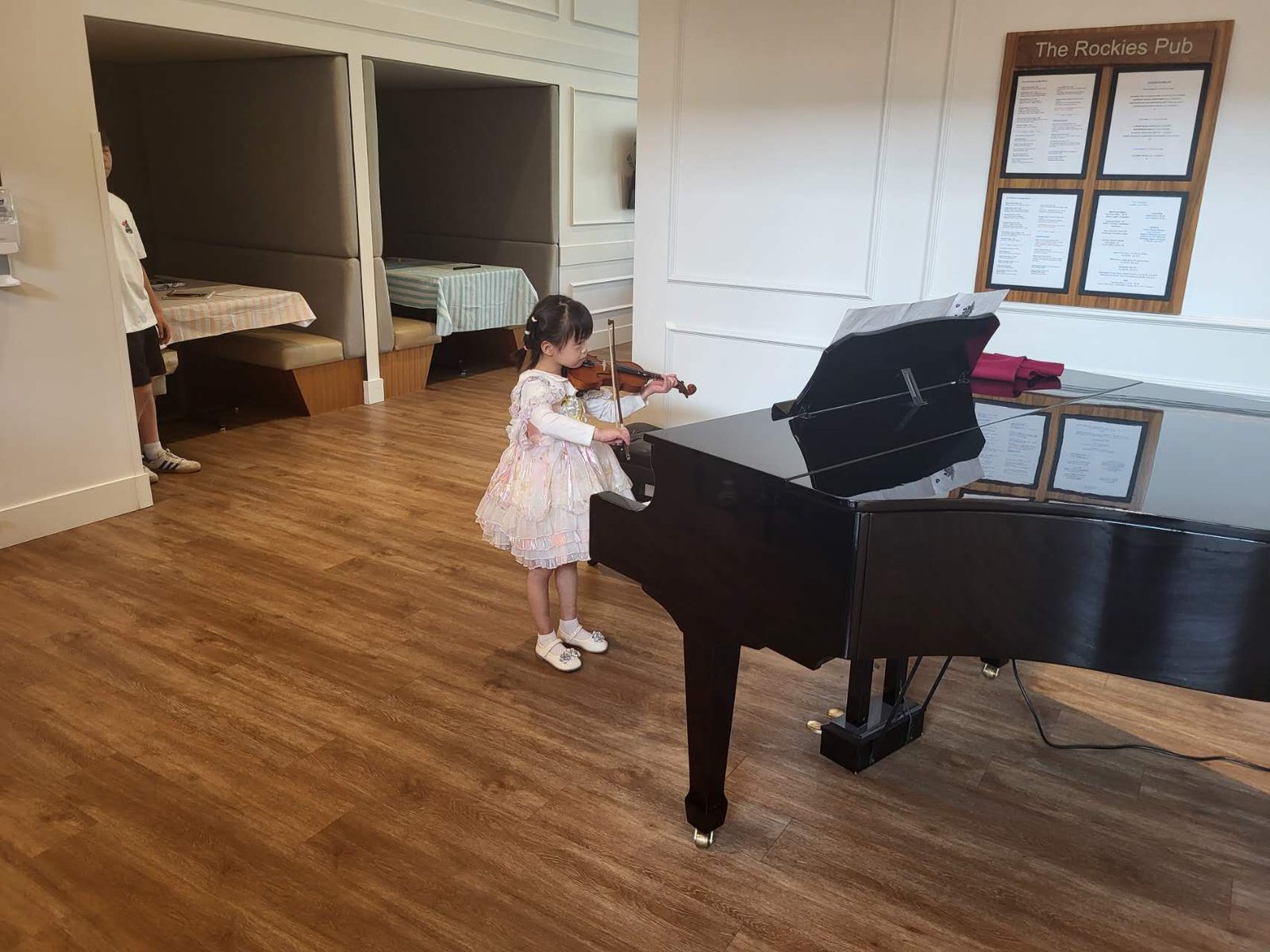
Live music at senior homes
Five to ten student musicians perform a 30 to 45 minute set in the home’s common room — mostly solo pieces with a few group numbers to close. We play the same homes month after month, so residents recognise faces and staff can put us on the calendar in advance.
- Piano, strings, voice, clarinet, cello — whatever you bring.
- No audition. Any level you’re comfortable playing in front of people.
- We check in before every date; you say yes to the ones that work.
- Volunteer hours logged on the day, certificate every 4 hours.
Assistive devices and adapted toys
Members 3D print and assemble devices from the Makers Making Change open-source library, a program of the Neil Squire Society. The designs are reviewed by occupational therapists; finished devices go to people in our community at little to no cost.
- You don’t need a printer — parts are printed ahead of the meeting.
- Build nights need hands: assembly, wiring switches, testing.
- Adapted toys let kids with limited motor control play independently.
- Build hours count toward the same volunteer total as performing.
Thirty-five minutes, start to finish
Setup
Arrive 20 minutes early, move chairs, find a plug, tune.
Solos
Each performer plays one or two pieces, introduced by name.
Requests
Residents ask for songs. We play the ones we know.
Group close
Something everyone can play together, then hours signed off.
The practical parts
Everything students ask before their first show.
No. Joining is free, and there is no fee for the homes we play in either.
As often as you want. Most students on the roster play once every month or two; some do every date.
That is most people’s first show. The audience is warm, the room is small, and nobody is scoring you.
Yes — the two programs are independent, and both earn the same volunteer hours.